Two days ago was yours truly’s birthday. But the day also marked the first anniversary of the Israel-Hamas War. In one year alone, nearly 42,000 lives have been lost in Gaza; 1,700 in Israel; 620 in the West Bank; 530 in Lebanon.
Fauré’s Pie Jesu.
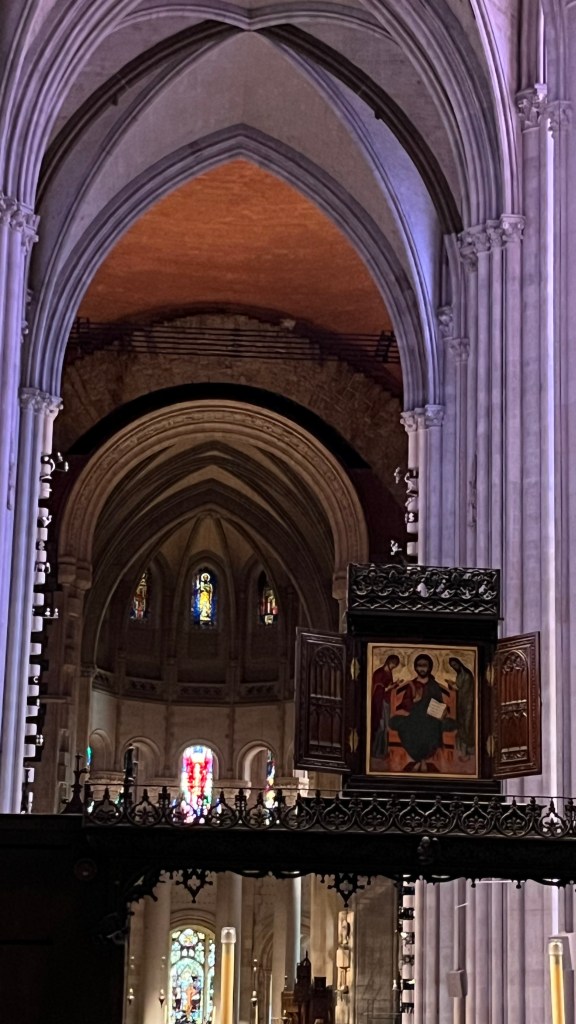
So that afternoon I remained in my beloved sanctuary—the Cathedral Church of St. John the Divine—just as I did on the 30th of December in the year 2012. In those days, my heavy heart was laden with melancholy. I sat humbly in a pew, thinking of the people of Syria, and of the families of Sandy Hook. Prayers to a deity never channeled solace to this iconoclast. That function rested with music, and always will. Slowly, silently, a song emerged in my mind.
In the spirit of Fauré’s Pie Jesu (my favorite rendition posted in the comment section below), I’d like to bring you a prayer of sorts that have gently gathered in my mind over the few days past:
Pie Jesu is the centerpiece of Gabriel Fauré’s monumental Requiem (Mass for the Dead). Never known to be a religious man, Fauré composed his Mass with his signature mélange of melodic elegance, harmonic complexity, and deceptive airs of simplicity, masterfully expressing the richness of a spirituality only true artists can cultivate. What strikes me most is that this Requiem, unlike typical Requiems, has the entire movement of Dies Irae (Day of Wrath) omitted, replacing it with Pie Jesu (Merciful Jesus). As an artist and agnostic, Fauré must have favored mercy vastly more than judgment, preferring restful consolation infinitely to eternal hellfire. The words of the maestro himself sum up most aptly: “Everything I managed to entertain by way of religious illusion I put into my Requiem, which moreover is dominated from beginning to end by a very human feeling of faith in eternal rest.”
In the spirit of Fauré’s Pie Jesu, I’d like to bring you a prayer of sorts that have gently gathered in my mind over the few days past:
May the world be filled with
less condemnation,
more merciful helping hands;
less fisted praise of brutality,
more tears of empathy;
less hurtful haste,
more sweet repose;
less platitude of sermon,
more wakeful hours in serene silence.
Pax nobiscum

 This Beautiful Moment